ACRD.one
Change Management image
The Importance of Change Management for Businesses in Mangalore and Bangalore

Change is inevitable in business—whether it’s technological advancements, shifting market demands, or internal restructuring. While change can be a positive force that drives growth, it can also create confusion, resistance, and disruption within an organization. This is where change management comes into play.

Change management is the structured approach to transitioning individuals, teams, and organizations from their current state to a desired future state. For businesses in Mangalore and Bangalore, effective change management is crucial for ensuring smooth transitions, maintaining employee morale, and achieving long-term success. In this article, we’ll explore the importance of change management, its key components, and practical strategies that businesses can implement to manage change effectively.


What is Change Management?
Change management is the discipline that guides organizations through the process of organizational change. It involves preparing, supporting, and helping employees adapt to new processes, technologies, or business models. The goal of change management is to minimize resistance, maximize employee engagement, and ensure that the desired outcomes of change are achieved.

Successful change management requires clear communication, employee involvement, and a well-defined plan. Businesses need to create an environment that supports change while addressing any concerns employees may have about the transition.


Why Change Management is Crucial for Businesses in Mangalore and Bangalore
Businesses in Mangalore and Bangalore face a dynamic and competitive environment. Whether adapting to new technologies, expanding operations, or responding to shifts in consumer behavior, effective change management is critical for ensuring that transitions are smooth and impactful. Here’s why change management is essential:

  • Minimizes Resistance: Change can be met with resistance, especially if employees feel uncertain or uninformed. By implementing a structured change management process, businesses can reduce resistance and increase employee buy-in.
  • Improves Adoption of New Systems: Change often involves the introduction of new tools, technologies, or processes. A well-executed change management plan ensures that employees are properly trained and equipped to use new systems effectively.
  • Increases Organizational Efficiency: Change management helps businesses streamline processes, optimize workflows, and improve overall productivity. It ensures that changes are implemented with minimal disruption to daily operations.
  • Enhances Employee Morale: Change can create anxiety and uncertainty among employees. A clear and supportive change management strategy helps alleviate concerns and keeps employees motivated throughout the transition.

Technical Tip: Use employee feedback surveys during the change process to gauge how well employees are adapting and to identify areas that need additional support.


Key Components of an Effective Change Management Strategy
A successful change management strategy involves several key components that ensure a smooth transition. Here are the essential elements of a change management plan:

  • Clear Vision and Objectives: Before implementing any change, it’s crucial to have a clear understanding of why the change is necessary and what the desired outcome is. Set specific, measurable objectives to guide the change process.
  • Stakeholder Engagement: Engage key stakeholders early in the process to secure buy-in and ensure that their concerns are addressed. This includes both leadership and employees who will be directly impacted by the change.
  • Communication Plan: Communication is a cornerstone of successful change management. Develop a communication plan that keeps all employees informed about the changes, why they are happening, and what to expect.
  • Training and Support: Providing adequate training and resources helps employees feel confident in navigating the changes. Consider offering workshops, one-on-one coaching, or online training modules to ensure employees are prepared.
  • Monitoring and Feedback: Continuously monitor the progress of the change process and collect feedback from employees. This will help you identify potential issues early and make adjustments as needed.

Technical Tip: Use project management tools like Asana or Trello to create a timeline for the change process. These tools help track progress, assign tasks, and ensure deadlines are met.


Benefits of Change Management for Businesses in Mangalore and Bangalore
For businesses in Mangalore and Bangalore, the benefits of change management are far-reaching and can have a significant impact on long-term success:

  • Successful Adoption of New Technologies: Whether upgrading software or implementing new systems, change management ensures that employees understand the new technology and are able to use it effectively, minimizing downtime and inefficiency.
  • Faster Transition and Implementation: By providing structure and guidance, change management helps organizations transition more quickly and effectively, reducing the time it takes to implement changes and start seeing results.
  • Sustained Growth and Adaptability: Businesses that manage change effectively are more adaptable and resilient in the face of future challenges. Change management ensures that organizations remain flexible and responsive to changing market conditions.
  • Improved Organizational Culture: Effective change management fosters a culture of collaboration, transparency, and continuous improvement. It encourages employees to embrace change as an opportunity for growth rather than a threat.

Technical Tip: Conduct a post-change review to evaluate the success of the change process. Identify what worked well and what could be improved for future change initiatives.


Change Management Strategies for Businesses in Mangalore and Bangalore
Here are some practical strategies businesses in Mangalore and Bangalore can implement to manage change effectively:

  • Start with Leadership Alignment: Successful change begins at the top. Ensure that leadership is aligned on the vision for change and is committed to supporting employees throughout the process. Leaders should act as change champions and lead by example.
  • Develop a Roadmap: Create a step-by-step roadmap for implementing change. Include timelines, milestones, and responsible parties to ensure that everyone is on the same page and knows what to expect.
  • Create a Feedback Loop: Encourage open communication throughout the change process. Create opportunities for employees to share their feedback, ask questions, and express concerns. This fosters trust and ensures that any issues are addressed promptly.
  • Celebrate Wins: Recognize and celebrate milestones along the way. Acknowledge the efforts of employees who are actively embracing change and contributing to the process.

Technical Tip: Use change management software like Prosci or ChangeGear to help plan and track change initiatives. These tools can help streamline the process and ensure nothing is overlooked.


Measuring the Success of Change Management Initiatives
Measuring the success of your change management initiatives is essential to determine whether the transition has been successful and identify areas for improvement. Here are some key metrics to track:

  • Employee Engagement: Measure employee engagement levels through surveys and feedback. High levels of engagement indicate that employees are embracing the change and adapting well.
  • Performance Metrics: Track key performance indicators (KPIs) related to the change. For example, if the change involves implementing new software, monitor productivity levels and system adoption rates.
  • Customer Satisfaction: If the change impacts your customer-facing operations, measure customer satisfaction to ensure that the change is improving service quality and customer experience.
  • ROI: Calculate the return on investment (ROI) for the change initiative. Has the change led to increased efficiency, reduced costs, or higher revenue?

Technical Tip: Use employee performance tracking tools and data analytics to monitor progress and assess the effectiveness of change management efforts.


Conclusion
Change management is essential for businesses in Mangalore and Bangalore that want to navigate transitions smoothly, improve efficiency, and ensure long-term success. By following a structured approach to change, businesses can minimize resistance, increase employee engagement, and adapt quickly to new opportunities. A well-executed change management strategy not only helps businesses manage transitions but also fosters a culture of continuous improvement and adaptability.

Call-to-Action:
Is your business facing a transition or change? Contact ACRD.one for expert change management consultation tailored to your needs in Mangalore and Bangalore!


Categories:

  • Business Consulting and Growth
  • Change Management

Tags:
change management, business transition, organizational change, employee engagement, business growth, process improvement, leadership alignment, Mangalore businesses, Bangalore businesses, training and support, organizational efficiency, business adaptability, customer satisfaction, feedback loop

Marketing Strategy Consultation image
Effective Marketing Strategy Consultation for Businesses in Mangalore and Bangalore

In today’s competitive business environment, having a well-defined marketing strategy is crucial for success. A comprehensive marketing strategy guides your business decisions, optimizes your marketing efforts, and ensures that your resources are utilized effectively. However, creating an effective marketing strategy can be challenging without the right expertise.

Marketing strategy consultation provides businesses with the insights, tools, and guidance needed to create and execute successful marketing plans. For businesses in Mangalore and Bangalore, leveraging professional marketing strategy consultation can help streamline efforts, increase brand visibility, and achieve measurable results. In this article, we’ll explore the importance of marketing strategy consultation and how it can benefit businesses looking to grow and thrive.


What is Marketing Strategy Consultation?
Marketing strategy consultation involves working with marketing experts to analyze your business’s current marketing efforts and develop a roadmap for future growth. Consultants provide expert advice, conduct market research, analyze competitors, and assist in defining your target audience to ensure that your marketing initiatives are effective and aligned with your business goals.

Consultants typically work with businesses to assess their current marketing activities, identify strengths and weaknesses, and create tailored strategies that maximize return on investment (ROI). They also help businesses implement marketing tactics across various channels, such as digital marketing, content marketing, and traditional media.


Why Marketing Strategy Consultation is Essential for Businesses in Mangalore and Bangalore
Marketing strategy consultation is essential for businesses in Mangalore and Bangalore because it provides a roadmap to achieve sustainable growth and success. Here’s why businesses should consider professional consultation:

  • Expert Insights and Analysis: Marketing consultants bring a wealth of experience and knowledge, offering insights that businesses may not have considered. They can provide a fresh perspective on your existing strategies and identify new opportunities for growth.
  • Targeted Marketing Efforts: A consultant helps businesses identify their ideal customer segments, craft relevant messaging, and select the right marketing channels. This targeted approach ensures that your marketing budget is spent effectively.
  • Improved ROI: With the right strategies in place, businesses can increase their return on investment by focusing on high-performing marketing activities and eliminating wasteful spending.
  • Stay Competitive: Mangalore and Bangalore are competitive markets, and businesses need to stay ahead of their competitors. A marketing strategy consultant will conduct a thorough competitive analysis to understand industry trends and identify opportunities to outsmart competitors.

Technical Tip: Use tools like Google Analytics to track your website’s traffic and performance. Your consultant can help you analyze this data to refine your marketing strategy.


Key Elements of a Marketing Strategy Consultation
A successful marketing strategy consultation covers several key components that ensure your business is on the right track. Here are the primary areas that consultants typically focus on:

  • Market Research and Analysis: Understanding your market is the first step in developing a strong marketing strategy. Consultants analyze your industry, customer behavior, and competitors to identify opportunities and threats.
  • Audience Segmentation: It’s essential to know who your target customers are, their needs, and how best to reach them. A consultant will help define your customer segments and tailor your messaging to speak directly to them.
  • Brand Positioning: Your brand needs to stand out in a crowded market. A marketing consultant helps position your brand in a way that resonates with your audience and differentiates you from competitors.
  • Marketing Channel Selection: A consultant helps you choose the best marketing channels—whether digital or traditional—to reach your target audience. This could include SEO, social media, paid advertising, email marketing, events, and more.
  • Budget Allocation: Allocating resources effectively is key to a successful marketing strategy. A consultant ensures that your marketing budget is used in the most impactful ways, balancing both short-term and long-term goals.

Technical Tip: When working with a marketing strategy consultant, use project management tools like Asana or Trello to keep track of marketing initiatives and deadlines.


Benefits of Marketing Strategy Consultation for Mangalore and Bangalore Businesses
For businesses in Mangalore and Bangalore, marketing strategy consultation offers several significant benefits:

  • Customized Strategies for Local Markets: Mangalore and Bangalore have unique customer demographics and cultural nuances. A marketing consultant familiar with these regions can develop strategies tailored to local preferences and needs, helping your business connect with the local audience more effectively.
  • Scalability and Growth: As businesses grow, their marketing needs change. A consultant helps create a marketing plan that evolves with your business, ensuring that your strategies scale alongside your growth.
  • Efficiency and Focus: With a clear marketing strategy in place, your team can focus on high-priority tasks, reduce confusion, and align efforts toward achieving business goals.
  • Improved Brand Visibility and Awareness: By optimizing your marketing efforts, a consultant helps enhance your brand’s visibility and ensures that your messaging reaches the right audience across the right channels.

Technical Tip: Leverage local SEO strategies to improve search engine rankings for region-specific queries related to Mangalore and Bangalore. This will increase your visibility among local customers.


Marketing Strategy Consulting for Digital and Traditional Channels
A marketing strategy consultant helps businesses navigate both digital and traditional marketing channels. Here’s how they can enhance both:

  • Digital Marketing: Digital channels such as social media, search engines, and email are critical for reaching a wide audience. A consultant can develop a digital marketing plan that includes SEO, content marketing, PPC campaigns, and social media strategies tailored to your business needs.
  • Traditional Marketing: While digital marketing is essential, traditional channels like print advertising, direct mail, and events still play a vital role. A consultant helps integrate these methods with your digital efforts, creating a comprehensive marketing plan.
  • Integrated Campaigns: The key to success is consistency across all channels. A consultant helps create integrated marketing campaigns that ensure your messaging and branding are cohesive across both digital and traditional media.

Technical Tip: Use marketing automation tools like HubSpot or Mailchimp to manage and optimize email marketing campaigns. These tools allow you to track performance and make data-driven decisions.


Measuring the Effectiveness of Marketing Strategies
The effectiveness of a marketing strategy needs to be measured regularly to ensure that the plan is achieving its goals. A marketing strategy consultant will help track and analyze key performance indicators (KPIs) that are crucial for success:

  • Customer Acquisition Cost (CAC): Measure how much it costs to acquire a new customer and work to reduce it by optimizing your marketing efforts.
  • Lead Generation: Track the number of leads generated by your marketing campaigns and assess how many of those leads convert into paying customers.
  • Conversion Rates: Measure how many website visitors, email recipients, or social media followers take desired actions, such as making a purchase or signing up for a newsletter.
  • Return on Investment (ROI): Calculate the ROI for each marketing campaign to understand which strategies are delivering the most value.

Technical Tip: Set up conversion tracking in Google Analytics and integrate it with your CRM to measure the effectiveness of various marketing campaigns across different channels.


Conclusion
Marketing strategy consultation is an invaluable resource for businesses in Mangalore and Bangalore looking to enhance their marketing efforts, improve ROI, and stay competitive. By working with a professional marketing consultant, businesses can ensure that their marketing activities are aligned with their goals, target audience, and market trends. Whether you’re looking to optimize your digital presence or expand your reach through traditional marketing, a solid strategy is the foundation for growth and success.

Call-to-Action:
Need expert guidance on developing your marketing strategy? Reach out to ACRD.one for customized marketing strategy consultation services tailored to businesses in Mangalore and Bangalore!


Categories:

  • Marketing and Branding
  • Marketing Strategy Consultation

Tags:
marketing strategy, business growth, marketing consultation, ROI, digital marketing, target audience, market research, branding, Mangalore businesses, Bangalore businesses, content marketing, marketing channels, lead generation, marketing optimization

content management image
Effective Content Management Strategies for Businesses in Mangalore and Bangalore

Content management is at the core of every successful digital marketing strategy. Whether you’re managing a website, blog, or social media presence, organizing, creating, and distributing content efficiently is essential to ensure consistent brand messaging, improved SEO, and better user engagement.

For businesses in Mangalore and Bangalore, implementing a robust content management strategy can help maintain high-quality content across various platforms while saving time and resources. In this article, we’ll explore the importance of content management, the best practices for managing content, and technical tips that can help optimize your content strategy.


What is Content Management?
Content management refers to the process of planning, creating, storing, editing, and distributing content across different channels. This can include text, images, videos, and other digital assets that are used for marketing purposes. Effective content management ensures that businesses maintain a consistent voice, deliver relevant content to their audience, and achieve marketing goals.

Content management can be handled through a Content Management System (CMS) like WordPress, Joomla, or Drupal, or a more sophisticated enterprise solution. The key is to organize content in a way that is scalable, easy to update, and aligned with your marketing objectives.


Why Content Management is Crucial for Businesses in Mangalore and Bangalore
Effective content management helps businesses stay organized and deliver high-quality content across all their digital platforms. Here are the key reasons why content management is essential for businesses in Mangalore and Bangalore:

  • Consistency in Branding: Proper content management ensures that all content aligns with your brand’s voice, tone, and messaging.
  • Improved Efficiency: A well-structured content management system reduces duplication of work and saves time. It enables teams to quickly access and update content as needed.
  • SEO Benefits: Consistently publishing high-quality, optimized content helps improve your website’s SEO rankings. A well-managed content strategy also ensures that relevant keywords and meta descriptions are used throughout your content.
  • Engagement and User Retention: Engaging content that addresses the needs of your audience encourages visitors to return and interact with your website. Well-managed content allows you to track user preferences and tailor your content accordingly.

Technical Tip: Use a CMS like WordPress or a project management tool like Trello to organize and schedule content creation, approval, and publication timelines.


Best Practices for Effective Content Management
To maximize the impact of your content, it’s essential to implement content management best practices. These include:

  • Content Planning and Strategy: Develop a content calendar to plan and organize topics, publication dates, and promotional strategies. This helps ensure consistent content output and reduces the risk of last-minute scrambling.
  • Content Segmentation: Segment your content based on your target audience’s interests, location, and behavior. For example, you may want to create specific content for Mangalore and Bangalore audiences that reflects their local preferences and needs.
  • Content Optimization for SEO: Ensure that your content is optimized for search engines by including relevant keywords, creating informative meta descriptions, using headings and subheadings, and optimizing image alt texts.
  • Collaboration Across Teams: Content management should involve collaboration between your marketing, sales, design, and technical teams. This ensures that content is aligned with your business goals and meets quality standards.

Technical Tip: Use tools like Google Keyword Planner to identify relevant keywords for each piece of content and integrate them naturally into your copy.


Leveraging Content Management Systems (CMS) for Efficiency
A Content Management System (CMS) is a powerful tool that allows businesses to create, store, manage, and publish digital content without requiring technical expertise. For businesses in Mangalore and Bangalore, utilizing a CMS like WordPress can significantly enhance the efficiency of content creation and management.

Here are some ways a CMS can improve your content management:

  • Centralized Content Hub: A CMS provides a single platform where you can manage all your content in one place, making it easier to organize, update, and monitor content.
  • Collaborative Workflows: A CMS allows multiple users to collaborate on content creation, editing, and approval, streamlining the process and ensuring content consistency.
  • Easy SEO Integration: Many CMS platforms come with built-in SEO tools that can help optimize content for search engines by providing suggestions for keywords, meta tags, and image optimization.
  • Scalability: As your business grows, a CMS can easily scale with your content needs, allowing you to add new content types or expand your website.

Technical Tip: For businesses in Mangalore and Bangalore, WordPress offers a user-friendly platform with a range of plugins for content optimization, like Yoast SEO or All in One SEO Pack, which help streamline your content optimization efforts.


Content Distribution and Promotion
Content management isn’t just about creating and organizing content; it also involves distributing and promoting content to ensure it reaches the right audience. Here are some effective content distribution strategies:

  • Email Marketing: Email newsletters are an excellent way to keep your audience updated with new content. Segment your email list based on interests and behavior to ensure that your content reaches the most relevant subscribers.
  • Social Media Channels: Share your content on social media platforms like Facebook, Instagram, Twitter, and LinkedIn to increase visibility and drive traffic to your website. Make sure to tailor your content to fit the platform and audience.
  • Guest Blogging and Partnerships: Collaborate with other businesses or influencers in Mangalore and Bangalore to guest post on their websites or share your content with their audience.
  • Paid Promotion: Invest in paid advertising, such as Google Ads or social media ads, to boost the reach of your best-performing content.

Technical Tip: Use social media scheduling tools like Buffer or Hootsuite to automate content sharing and ensure consistent engagement with your audience.


Tracking and Analyzing Content Performance
To ensure that your content is effective, it’s essential to track and analyze its performance regularly. Key metrics to track include:

  • Page Views: Track how many people are visiting your content to determine its reach.
  • Engagement Rate: Measure how much your audience interacts with your content (likes, shares, comments) to gauge its relevance and appeal.
  • Conversion Rate: Track how well your content leads to desired actions, such as purchases, sign-ups, or inquiries.
  • Bounce Rate: Monitor the bounce rate to see if users are staying on your page or leaving quickly.

Technical Tip: Use Google Analytics and social media analytics tools to track the performance of your content. Set up UTM parameters to track the effectiveness of your promotional campaigns.


Conclusion
Content management is an essential strategy for businesses in Mangalore and Bangalore looking to streamline their content creation, distribution, and optimization efforts. By implementing the best practices, leveraging a content management system, and using the right tools to track performance, businesses can improve user engagement, enhance SEO, and drive better business results. Whether you are a small local business or an enterprise, effective content management helps you stay organized, maintain a consistent brand voice, and ultimately connect with your target audience more effectively.

Call-to-Action:
Need help managing your content effectively? Reach out to ACRD.one for expert content management services tailored to your business in Mangalore and Bangalore!


Categories:

  • Marketing and Branding
  • Content Management

Tags:
content management, digital marketing, content strategy, SEO optimization, content creation, CMS, WordPress, Mangalore businesses, Bangalore businesses, content distribution, content marketing, engagement, content tracking, email marketing, social media, content performance

Pay Per Click (PPC) Consulting image
Maximizing ROI with Pay Per Click (PPC) Consulting for Businesses in Mangalore and Bangalore

Pay Per Click (PPC) advertising is one of the most effective ways to drive targeted traffic to your website, increase brand visibility, and boost conversions. However, without proper strategy and optimization, businesses in Mangalore and Bangalore may struggle to achieve the desired ROI. This is where PPC consulting comes in.

PPC consulting is a specialized service that helps businesses manage and optimize their paid advertising campaigns, ensuring that every dollar spent is working towards achieving the business’s goals. From keyword research to campaign setup, ad copy creation, and ongoing optimization, a skilled PPC consultant can ensure that your ads are reaching the right audience at the right time.

In this article, we’ll discuss the importance of PPC consulting, key strategies for success, and technical tips that can help you run a cost-effective PPC campaign.


What is Pay Per Click (PPC) Advertising?
PPC is an online advertising model where advertisers pay a fee each time their ad is clicked. The most popular platform for PPC advertising is Google Ads, but other platforms such as Bing Ads, Facebook Ads, and LinkedIn Ads also offer PPC services.

The goal of PPC advertising is to drive qualified traffic to your website, increase brand awareness, and ultimately generate more conversions. Unlike organic search strategies, where results take time, PPC delivers immediate visibility in search engine results, which makes it a valuable tool for businesses looking to drive quick results.


The Importance of PPC Consulting for Businesses in Mangalore and Bangalore
PPC consulting helps businesses maximize the effectiveness of their paid campaigns. With the right expertise, a PPC consultant can set up, manage, and optimize your campaigns to achieve better results while keeping your budget under control.

Here are some reasons why PPC consulting is important for businesses in Mangalore and Bangalore:

  • Expert Knowledge: PPC consultants are experienced in managing ad campaigns and can offer valuable insights that can improve campaign performance.
  • Cost Efficiency: A PPC consultant can help you set up effective bidding strategies and optimize your ads, ensuring that you are not overspending.
  • Targeting Precision: Consultants can refine your audience targeting to ensure that your ads reach the right people at the right time, increasing the likelihood of conversions.
  • Performance Monitoring: PPC consultants regularly monitor campaign performance and make adjustments to ensure that your ads continue to drive the best results.

Technical Tip: Regularly track and monitor campaign performance using Google Ads’ conversion tracking and Google Analytics to ensure your campaigns are meeting your business objectives.


Setting Up a Successful PPC Campaign
Setting up a PPC campaign requires a strategic approach to ensure that it is effective. Here are the key steps involved in creating a successful PPC campaign:

  • Keyword Research: Proper keyword research is crucial for targeting the right audience. Use keyword tools like Google Keyword Planner or SEMrush to identify high-performing keywords relevant to your business. For example, if you’re in the digital marketing space in Mangalore, you might target keywords like “SEO services in Mangalore” or “PPC advertising in Bangalore.”
  • Campaign Structure: Organize your campaigns based on goals, target audience, and geographical location. For businesses in Mangalore and Bangalore, consider creating separate campaigns targeting each region.
  • Ad Creation: Craft compelling ad copy that resonates with your target audience. Ensure that your ads have clear calls to action (CTAs) and provide value to users.
  • Landing Pages: Create optimized landing pages that align with your ad messaging. A well-optimized landing page can drastically improve your conversion rates.

Technical Tip: Test different ad variations to determine which copy, keywords, and landing pages produce the best results. Use A/B testing to find the most effective combinations.


Optimizing PPC Campaigns for Better Results
Once your PPC campaign is live, ongoing optimization is essential for maintaining its performance and ensuring maximum ROI. Here’s how to optimize your PPC campaigns:

  • Bid Management: Constantly adjust your bids to ensure you’re getting the most out of your ad budget. Consider using automated bidding strategies like target CPA or ROAS to achieve your desired results.
  • Ad Extensions: Utilize ad extensions such as site link extensions, call extensions, and location extensions to increase the visibility and relevance of your ads.
  • Negative Keywords: Regularly review search query reports and add negative keywords to filter out irrelevant traffic, ensuring that you’re only paying for clicks that are likely to convert.
  • A/B Testing: Regularly test your ad copy, headlines, and call-to-action buttons to identify the most effective combinations. Small changes in your ad copy can result in significant improvements in your CTR (click-through rate).

Technical Tip: Use Google Ads’ automated rules to optimize your bids based on the time of day, device type, or audience behavior. This can help you get the most out of your ad budget.


Monitoring and Analyzing PPC Campaign Performance
Continuous monitoring and analysis of your PPC campaign’s performance are crucial for ensuring that your ads are performing as expected. With PPC consulting, experts help analyze data and provide actionable insights to improve your campaigns.

Key metrics to track include:

  • Click-Through Rate (CTR): The percentage of people who click on your ad after seeing it. A high CTR indicates that your ad is relevant to your audience.
  • Conversion Rate: The percentage of visitors who complete a desired action, such as making a purchase or signing up for a newsletter.
  • Cost Per Click (CPC): The amount you pay each time someone clicks on your ad.
  • Return on Investment (ROI): The overall profitability of your PPC campaigns.

Technical Tip: Use Google Analytics to track the full customer journey and determine the ROI of your PPC campaigns. Link your Google Ads account with Google Analytics for deeper insights.


Retargeting and Remarketing for Enhanced Conversions
Retargeting is an advanced PPC strategy that targets users who have previously interacted with your website but didn’t complete a conversion. Retargeting ads help bring back visitors who have shown interest in your products or services, increasing the likelihood of conversion.

Retargeting can be done across multiple platforms, including Google Ads, Facebook Ads, and Instagram. By showing tailored ads to people who are already familiar with your brand, you increase the chances of them returning to your website and converting.

Technical Tip: Use remarketing lists for search ads (RLSA) to target users who have previously visited your site and then performed a search related to your business.


Conclusion
Pay Per Click (PPC) advertising is a powerful tool for businesses in Mangalore and Bangalore looking to drive qualified traffic and achieve quick results. With PPC consulting, businesses can maximize their ad spend, refine their targeting strategies, and optimize their campaigns for better ROI. Regular monitoring, optimization, and strategic retargeting can further enhance the effectiveness of your PPC efforts, leading to higher conversions and improved business growth.

Call-to-Action:
If you’re ready to take your PPC campaigns to the next level, contact ACRD.one today for expert PPC consulting services designed to drive results for your business!


Categories:

  • Marketing and Branding
  • Paid Advertising
  • PPC Consulting

Tags:
pay per click, PPC advertising, Google Ads, PPC consulting, digital marketing, campaign optimization, ROI, conversion rate, Mangalore businesses, Bangalore businesses, paid ads, A/B testing, retargeting, remarketing, keyword research

Conversion Rate Optimization image
Maximizing Your Website’s Potential with Conversion Rate Optimization (CRO) in Mangalore and Bangalore

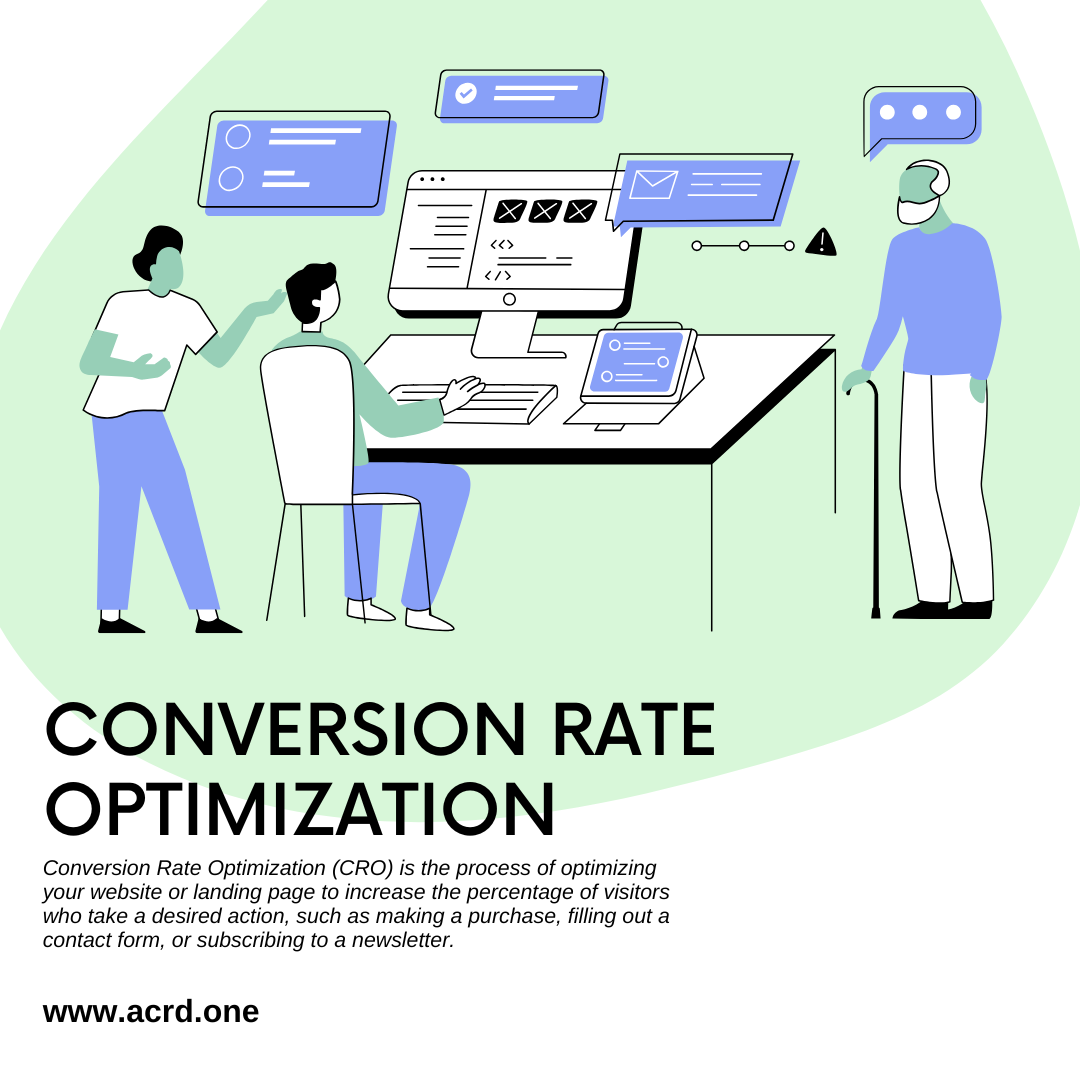
Conversion Rate Optimization (CRO) is the process of optimizing your website or landing page to increase the percentage of visitors who take a desired action, such as making a purchase, filling out a contact form, or subscribing to a newsletter. For businesses in Mangalore and Bangalore, improving your conversion rate is critical to maximizing the value of your website traffic and boosting your bottom line. Even small improvements in your website’s conversion rate can lead to significant increases in revenue.

This article will explore the importance of CRO, strategies to implement, and technical tips that can help businesses in Mangalore and Bangalore increase conversions and reduce bounce rates.


What is Conversion Rate Optimization (CRO)?
Conversion Rate Optimization refers to the practice of enhancing the user experience on your website to increase the likelihood of users completing the desired actions. These actions can vary depending on your business goals but typically include purchases, form submissions, or engagement with key content.

CRO is based on a data-driven approach, where decisions are made by analyzing user behavior, testing different elements of a website, and refining the design and content to encourage users to convert. This process includes various techniques like A/B testing, improving user experience (UX), enhancing call-to-action (CTA) buttons, and optimizing the content layout.


Understanding Your Current Conversion Rates
Before you can optimize your conversion rates, you must first understand your baseline. Identifying your current conversion rate helps you measure the success of your CRO efforts. The average conversion rate for websites typically ranges from 1% to 5%, but this can vary depending on the industry and type of business.

To calculate your conversion rate:

  • Conversion Rate = (Number of Conversions ÷ Total Website Visitors) x 100

For example, if your website receives 1,000 visitors and 50 of them make a purchase, your conversion rate is 5%.

Technical Tip: Use Google Analytics to set up goals and track key conversion actions like purchases, sign-ups, or contact form submissions.


Identifying Conversion Roadblocks
One of the first steps in CRO is identifying barriers that prevent visitors from completing a desired action. These roadblocks can include:

  • Slow Load Time: A slow website can cause visitors to leave before they convert.
  • Poor User Experience (UX): A confusing layout or difficult navigation can frustrate users and lead them to abandon the site.
  • Unclear Calls to Action (CTAs): If CTAs are hidden, unclear, or hard to find, users may not know what action to take.
  • Form Friction: Long or complicated forms can deter visitors from completing sign-ups or making a purchase.

Technical Tip: Use tools like Hotjar or Crazy Egg to analyze heatmaps and session recordings. These tools will show you where users click, scroll, and where they drop off on your website.


A/B Testing: The Key to CRO Success
A/B testing is one of the most effective methods for improving your conversion rate. By creating two or more versions of a webpage or element (e.g., CTA button), you can test which one performs better.

Here’s how to conduct a successful A/B test:

  • Define Your Objective: Decide what action you want to test (e.g., getting more newsletter sign-ups or increasing product purchases).
  • Create Variations: Modify one element on the page at a time, such as changing the text on a CTA button or experimenting with the layout.
  • Test Your Variations: Run the test and collect data on which variation leads to more conversions.
  • Analyze and Implement: Once the test is complete, implement the winning variation and continue testing other elements.

Technical Tip: Use A/B testing tools like Google Optimize or Optimizely to run tests and track the results. Be sure to allow enough time for the test to gather statistically significant data before drawing conclusions.


Optimizing Your Website’s User Experience (UX)
A smooth and intuitive user experience is critical for boosting conversions. If your website is difficult to navigate, has unclear messaging, or presents a poor visual design, users may leave without converting.

To optimize UX:

  • Mobile Optimization: With increasing mobile traffic, your website must be fully optimized for mobile users. Ensure it loads quickly and has an intuitive design.
  • Simplify Navigation: Organize content and navigation in a way that makes it easy for users to find what they need.
  • Clear and Visible CTAs: Make your CTAs stand out by using contrasting colors and clear, action-oriented language.
  • Social Proof: Display customer reviews, testimonials, and trust badges to build credibility.

Example: A Bangalore-based e-commerce store simplified its checkout process, reduced form fields, and made the payment process easier. This led to a 20% increase in conversions.

Technical Tip: Conduct a usability test with real users to identify pain points in the user journey. Tools like UserTesting can help you understand how users interact with your website.


Leveraging Persuasive Design and Copy
Great design and persuasive copywriting are powerful tools in CRO. By presenting information in an appealing way and using compelling language, you can persuade users to take action.

Key strategies to apply:

  • Compelling Headlines and Copy: Use clear, benefit-driven headlines that show users what they will gain by taking action.
  • Urgency and Scarcity: Words like “limited time offer” or “only a few items left” can create a sense of urgency and encourage quicker decisions.
  • Social Proof and Trust Signals: Showcase positive customer reviews, ratings, and industry certifications to build trust.

Technical Tip: Use conversion copywriting techniques, such as writing benefit-driven CTAs or offering free trials, to make your offers more attractive to visitors.


Retargeting and Personalized Marketing
Retargeting is another powerful strategy to increase conversions. Visitors who have already shown interest in your products or services can be targeted with ads across different platforms to bring them back to your site.

You can also implement personalized marketing to deliver tailored offers to visitors based on their behavior. For example, if a visitor looked at a particular product but didn’t buy it, you can show them an ad or email with a discount for that product.

Technical Tip: Use Google Ads or Facebook Ads to retarget visitors who have interacted with your website. Personalized emails can be set up using email marketing platforms like Mailchimp.


Conclusion
Conversion Rate Optimization is a continual process of analyzing, testing, and improving your website’s performance. By understanding your current conversion rates, identifying roadblocks, running A/B tests, and optimizing your UX and design, you can significantly improve the effectiveness of your website and increase conversions. For businesses in Mangalore and Bangalore, applying these CRO strategies can lead to higher sales, increased revenue, and better customer retention.

Call-to-Action:
Ready to boost your website’s conversion rates? Contact ACRD.one today for expert CRO services tailored to your business’s needs!


Categories:

  • Marketing and Branding
  • Conversion Rate Optimization

Tags:
conversion rate optimization, CRO strategies, A/B testing, website optimization, improve conversions, user experience, persuasive design, mobile optimization, call to action, Mangalore businesses, Bangalore businesses

Enterprise SEO images
Mastering Enterprise SEO for Large-Scale Success in Mangalore and Bangalore

Enterprise SEO is a crucial strategy for large businesses that need to optimize their online presence at scale. It focuses on improving the visibility of high-volume websites and ensuring they rank well on search engines. For businesses in Mangalore and Bangalore with a large product range, multiple locations, or complex websites, Enterprise SEO is essential for managing and optimizing the vast amount of data across the digital landscape. With well-planned strategies, enterprises can achieve sustainable growth and outperform their competitors in the search results.


What is Enterprise SEO?
Enterprise SEO refers to the process of optimizing the websites of large organizations with hundreds or thousands of pages. Unlike small businesses, enterprise websites usually involve more complex architecture, multiple user roles, and a broad target audience. The goal of Enterprise SEO is to improve the website’s organic search visibility, site architecture, content strategy, and overall user experience across large-scale platforms.

Enterprise SEO strategies also include multi-location SEO for businesses with branches in different regions or countries, keyword strategy development, content optimization, technical SEO, and performance tracking.


The Importance of a Solid Technical Foundation for Enterprise SEO
For large businesses, the website’s technical foundation is critical to SEO success. A scalable, fast-loading site with easy navigation is a must to ensure customers can find what they are looking for quickly and easily.

Key areas to focus on include:

  • Site Architecture: A well-structured URL hierarchy that makes it easy for search engines to crawl and index content is essential.
  • Internal Linking: Use clear internal linking to help users and search engines navigate between important pages across the site.
  • Mobile Optimization: With mobile-first indexing, ensuring that your website is fully optimized for mobile devices is non-negotiable.
  • Page Speed: A slow website can harm rankings and user experience. Optimize your site’s loading speed by minimizing large images, scripts, and other elements.

Technical Tip: Use Google Search Console and Screaming Frog to crawl your site regularly to identify any technical issues like broken links, duplicate content, or slow-loading pages.


Keyword Strategy for Large Websites
For large enterprises, an effective keyword strategy is essential. It’s not just about targeting high-volume keywords; it’s about organizing your keywords into logical groups that align with your business objectives and audience intent.

Start by:

  • Conducting Extensive Keyword Research: Use tools like SEMrush or Ahrefs to identify both short-tail and long-tail keywords that will bring traffic to different sections of your website.
  • Implementing Keyword Clusters: Rather than optimizing individual pages for single keywords, create keyword clusters that address related topics. This helps organize content and improves ranking for related searches.
  • Local SEO Considerations: If your enterprise has multiple locations in Mangalore and Bangalore, focus on location-based keywords like “restaurant in Mangalore” or “IT services in Bangalore.”

Technical Tip: Integrate keyword variations and synonyms into your content, meta descriptions, and URLs to avoid keyword cannibalization.


Content Strategy for Enterprise SEO
With vast amounts of content on an enterprise website, it’s important to focus on creating relevant, high-quality content that engages your audience and supports your SEO efforts.

Effective content strategies for enterprise websites include:

  • Content Optimization: Regularly update content to ensure that it is accurate, relevant, and aligned with user search intent.
  • Content Silos: Organize content into thematic groups, or “silos,” so search engines can better understand and rank it.
  • Rich Media: Including videos, infographics, case studies, and downloadable resources helps increase engagement and time on site.

Example: A Bangalore-based e-commerce business implemented a blog strategy targeting different product categories with in-depth articles. By focusing on long-tail keywords, they saw a 25% increase in organic traffic over six months.

Technical Tip: Use tools like HubSpot or WordPress to maintain a consistent content calendar and ensure fresh content is being published regularly.


Managing Enterprise SEO Across Multiple Locations
For businesses with multiple locations, such as a chain of stores or a national enterprise, it’s important to optimize each location’s pages to rank for region-specific searches.

Here’s how:

  • Create Location-Specific Landing Pages: Build individual pages for each location with local content, such as customer reviews, local promotions, and address information.
  • Optimize Google My Business Listings: Ensure each location has an updated Google My Business (GMB) listing and encourage local reviews.
  • Local Backlinks: Earn backlinks from local websites to improve the authority of each location’s page.

Technical Tip: Use a geo-targeting strategy by setting up separate subdomains or directories for each location (e.g., bangalore.company.com or company.com/bangalore).


Performance Tracking and Continuous Optimization
For enterprise websites, performance tracking and continuous optimization are key to staying competitive in search rankings.

Some important metrics to monitor include:

  • Organic Traffic Growth: Measure the increase or decrease in organic visitors over time.
  • Conversion Rates: Track how many visitors are converting into customers or leads.
  • Bounce Rate: A high bounce rate can signal issues with user experience or content relevance.

Technical Tip: Use Google Analytics and Google Tag Manager to set up custom tracking goals, such as form submissions or product purchases, to measure the effectiveness of your SEO strategy.


Case Study: Enterprise SEO Success
A large enterprise in Bangalore operating in the retail sector optimized their website for Enterprise SEO. They focused on improving site architecture, keyword strategy, and local SEO for their multiple locations.

Result: Within six months, the enterprise saw a 45% increase in organic traffic and a 30% increase in store visits due to improved local rankings.


Conclusion
Enterprise SEO is an ongoing process that requires careful planning, execution, and tracking. By focusing on technical optimization, creating a strong keyword strategy, and producing valuable content, businesses in Mangalore and Bangalore can achieve scalable SEO success and stay ahead of the competition.

Call-to-Action:
Want to take your large-scale business to the next level with Enterprise SEO? Reach out to ACRD.one for expert SEO solutions tailored to your enterprise needs!


Categories:

  • Marketing and Branding
  • Enterprise SEO

Tags:
enterprise seo, seo for large businesses, keyword strategy, content strategy, technical seo, local seo, seo for multi-location businesses, seo best practices, Mangalore businesses, Bangalore businesses

Google Local Services images
Boost Your Local Business with Google Local Services

Introduction
For small and medium-sized businesses in Mangalore and Bangalore, local visibility is key to attracting new customers. Google Local Services is a powerful tool designed to help businesses connect with nearby customers actively searching for their services. By leveraging this feature, you can increase footfall, generate more leads, and build trust with your audience.

What are Google Local Services Ads?
Google Local Services Ads (LSAs) are a pay-per-lead advertising option that appears at the top of search results when users look for services like “plumber near me” or “salon in Bangalore.” Unlike traditional ads, LSAs prioritize verified businesses, showcasing their name, rating, and contact information.

Businesses using LSAs are eligible for a “Google Guaranteed” badge, which boosts customer confidence by showing that Google has verified your business.


1. Setting Up Google Local Services Ads
To get started, follow these steps:

  • Create a Profile: Register your business on Google Local Services by providing details such as your location, services, and operating hours.
  • Verification Process: Complete Google’s background check and license verification to earn the “Google Guaranteed” badge.
  • Set Your Budget: LSAs charge per lead rather than per click, making it easier to control your spending.

Technical Tip: Use Google My Business (GMB) in tandem with LSAs to ensure your profile is up-to-date with accurate contact details and customer reviews.


2. Benefits of Google Local Services for Businesses
Using LSAs provides several advantages:

  • Increased Visibility: Appear at the top of Google search results, above organic listings and standard ads.
  • Targeted Leads: Connect directly with local customers who are searching for your services.
  • Pay for Performance: Only pay when you receive a qualified lead, ensuring your budget is spent efficiently.

Example: A pest control business in Mangalore increased its monthly leads by 30% by using LSAs alongside an updated GMB profile.


3. Optimizing Your Google Local Services Ads
To maximize the impact of LSAs, optimization is crucial.

  • Maintain High-Quality Ratings: Encourage satisfied customers to leave reviews, as businesses with higher ratings tend to rank better.
  • Respond Promptly: Quick responses to customer inquiries improve your chances of securing leads.
  • Choose Relevant Keywords: Focus on location-based keywords like “electrician in Bangalore” to attract targeted customers.

Technical Tip: Use Google’s Ad Insights tool to monitor your ad performance and refine your targeting over time.


Result: Within two months, they experienced a 40% increase in weekly bookings and gained several repeat customers.


  • Using Localized Content: Include city-specific terms like “Mangalore’s best plumber” on your website and ads.
  • Leveraging Reviews: Consistently ask for feedback and reviews on Google and social media platforms.
  • Mobile Optimization: Ensure your website is mobile-friendly, as most local searches come from smartphones.

Conclusion
Google Local Services is a game-changing tool for local businesses aiming to enhance their visibility and attract more customers. By investing time in setup, optimization, and customer interaction, businesses in Mangalore and Bangalore can harness the full potential of LSAs to drive growth and improve their reputation.

Call-to-Action:
Want expert help setting up and optimizing your Google Local Services Ads? Contact ACRD.one today to get started!


Categories:

  • Marketing and Branding
  • Google Local Services

Tags:
google local services, local business marketing, local visibility, digital marketing tips, customer lead generation, Mangalore businesses, Bangalore businesses